

Tunia
Chiara Innocenti &
Francesca di Benedetto
Arezzo
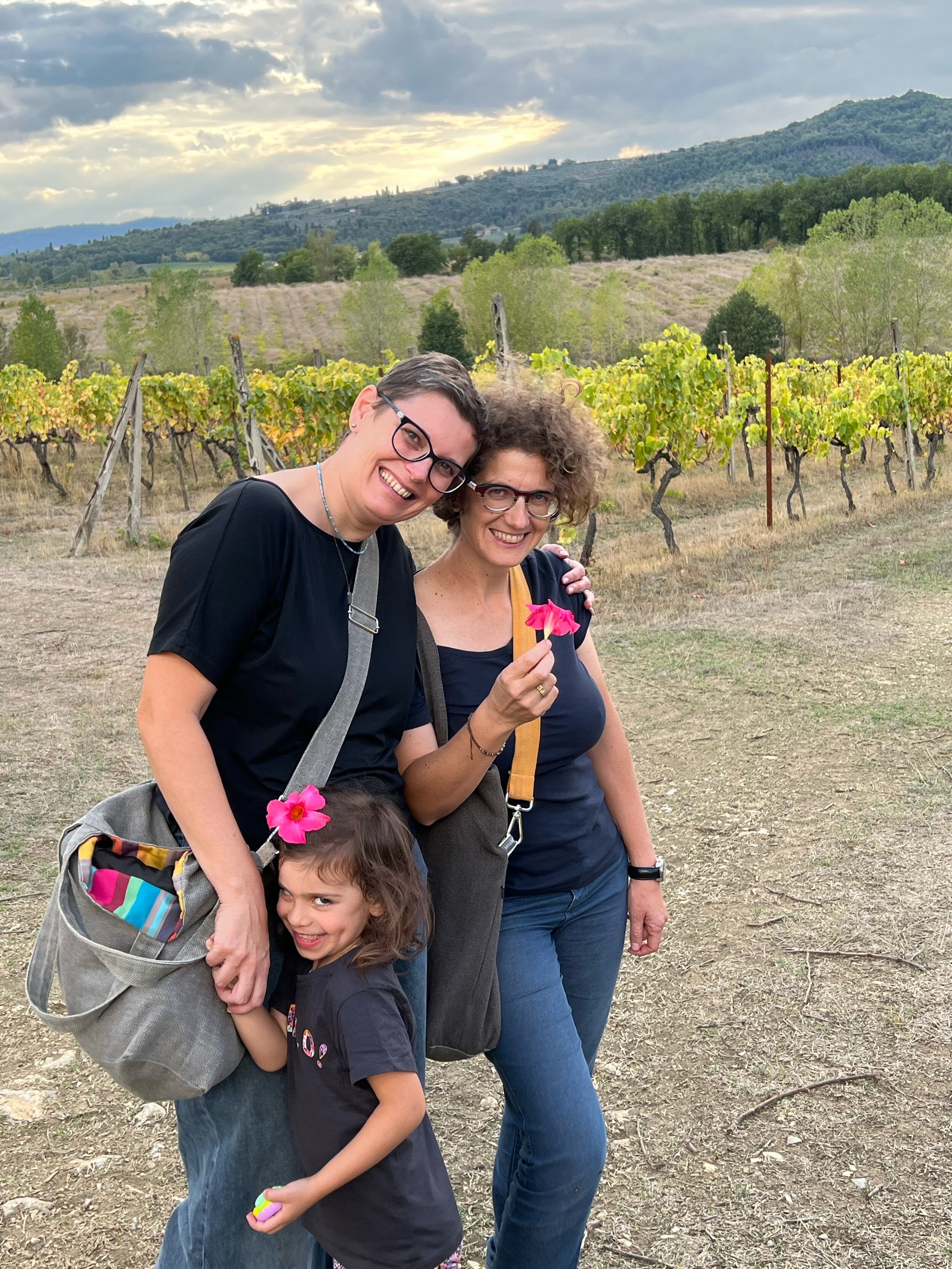
We first met Chiara and Francesca of Tunia in Chianti. They were at a table beside Elisabetta Montesissa, who was close with Francesca's partner Gulio Armani (the winemaker at Dinavolo and La Stoppa). Chiara's husband was close by at the Cantina Margo table. It felt like meeting a little microcosm of the Italian natural wine community, and while the wines were all different and full of their own character, I felt a strong affinity in perspective and transparency that informs much of what I think makes sense and doesn't in Italian wine today.
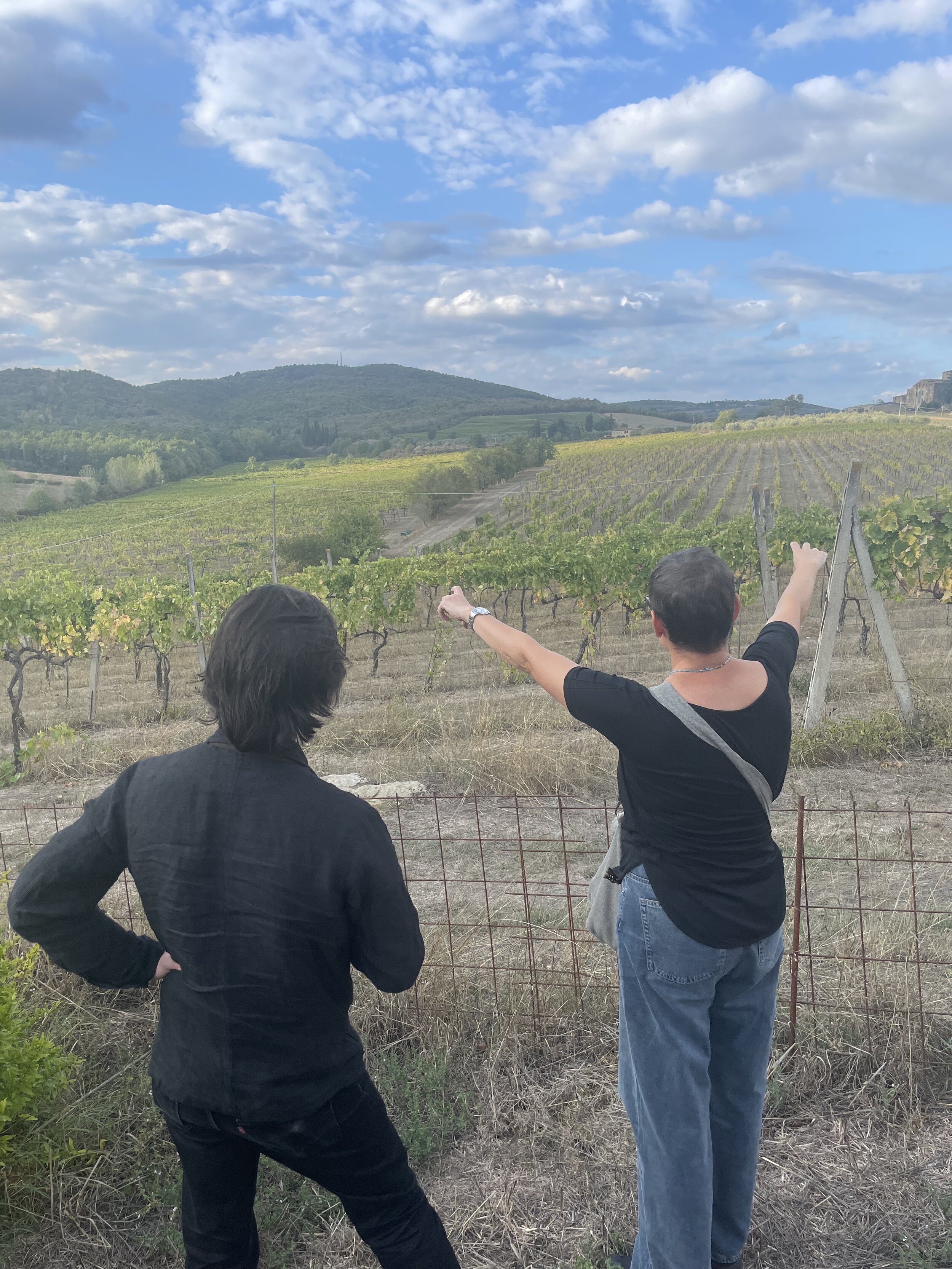
The facts are these: Francesca and Chiara met in college where Francesca was studying Oenology and Chiara business. They decided to purchase a square plot of land in Arezzo, Chianti where vines were growing for the students of the University of Florence. What they've done with the block is profound. The vineyards are organic, biodynamic and lush with as many olive trees as grapevines. They make incredible olive oil we buy when the harvests are good.
The cellar work is incomparable. Most of Tunia's great wines rest in large 24hl barrels for 5, 6, or 7 years, completely without sulphur or additions, just waiting for their perfect moment. Many of the current releases are from 10 year old harvests. This has been the philosophy since the start, and the result is a style that is both rustic and regal. They are "old world" in some very romantic sense -- wildly complex, herbaceous, balsamic, and complete. They run the gamut of classical Chianti blends, to decade-old "Super Tuscan" Cabernet, botrytized macerations, and other-worldly passito. Tunia vineyards were planted in 1970.
2020

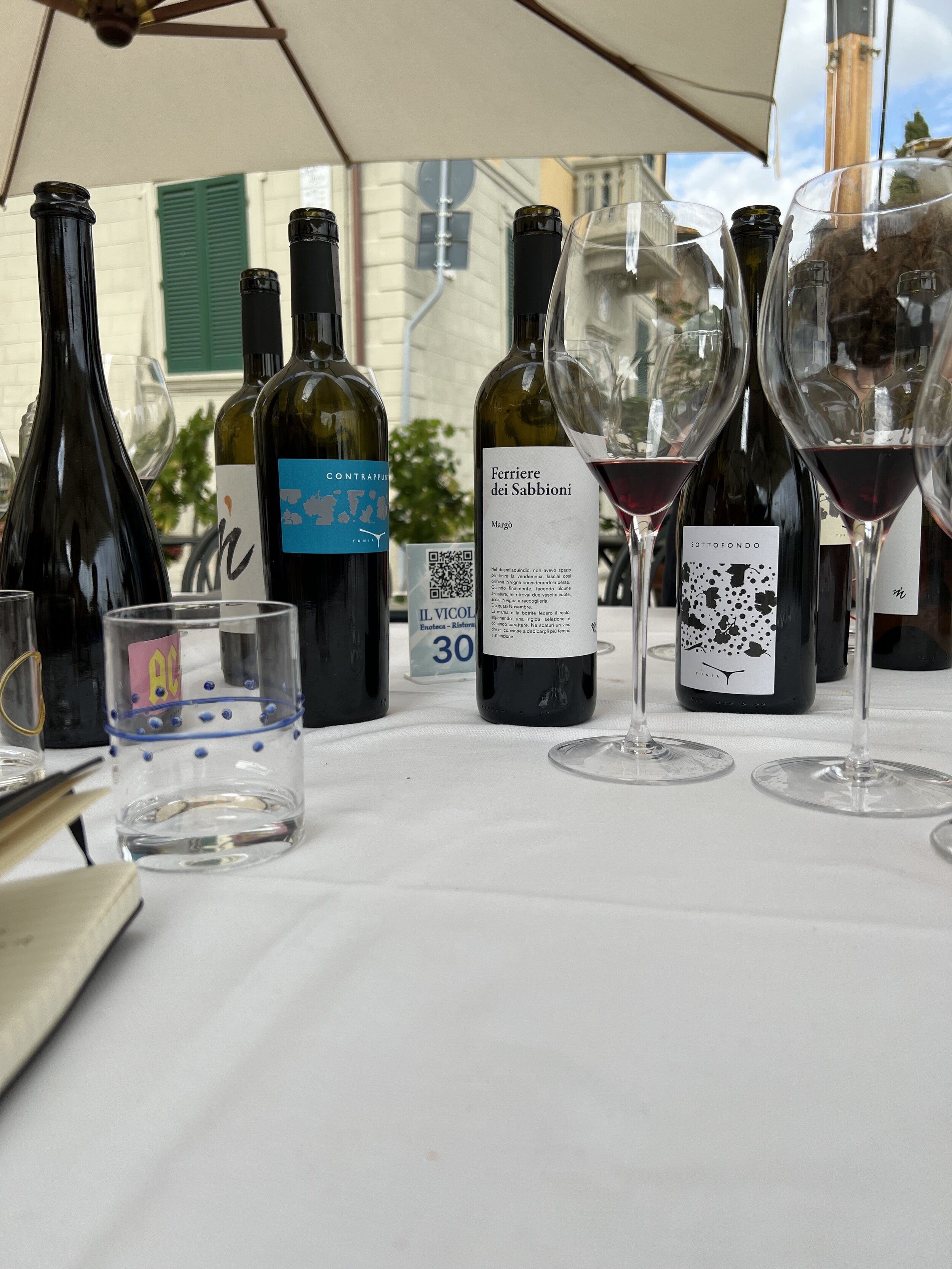
Vino Bianco Frizzante "Sottofondo" 2020
VARIETY :
Trebbiano macerated with skin contact.
TERROIR : Early and late harvest combined of Trebbiano. Clay/Limestone on the hills bordering the Val di Chiana South-west exposure. Altitude of 300 meters
HARVEST : hand picked
VINIFICATION :
Early and late harvests ferment separately, 1 month skin contact before being assembled; the second fermentation occurs on lees, in bottle and begins by adding must of the typical sweet Vin Santo.
2018

IGT Toscana "Contrappunto" 2019
VARIETY :
50% Sangiovese / 50% Cabernet Sauvignon
TERROIR :
Vines planted in 1970 and 2005
Clay/Limestone on the hills bordering the Val di Chiana South-west exposure.
Altitude of 300 meters
HARVEST : hand picked
VINIFICATION :
Co-fermented in steel.
Cabernet pressed directly into the fermentation tank - only the must, no skins. Aged in steel.
2015

IGT Toscana "Chiarofiore" 2015
VARIETY :
70 % Trebbiano / 30 % Vermentino
TERROIR :
vines planted in the 1970s
Organic
HARVEST : hand picked in 4 harvests, 3 throughout September and the last in November.
VINIFICATION :
The four harvests are vinified separately, some parcels see skin contact and other are directly pressed, all in steel containers.
On fine lees for 12 months, then in bottle for another 6 months.
2011, 2012, 2013

IGT Toscana "Chiassobuio" 2011
VARIETY : Sangiovese 90% / Colorino 5% / Canaiolo 5%
TERROIR :
vines planted in 1970s
Organic
HARVEST : hand picked
VINIFICATION :
Mostly (70%) fermented in steel tanks, the rest in Slavonian oak vats with maceration for about 20 days.
A portion aged in steel tanks (60%), the rest in new Slavonian oak vats for 12 months.
Aged for an other 12 months in bottle.
2010, 2011

Bianco "Cantamoro" 2010
VARIETY : Cabernet Sauvignon
TERROIR :
Vines planted in 2005
Organic
HARVEST : hand picked
VINIFICATION :
Fermented in French oak vats, with a long maceration (about 30 days).
Aged for 18 months, 60% of the wine is aged in wooden vats, the remaining 40% in stainless steel tanks. Then more aging in bottle for 12 months.
2009

IGT Toscana Bianco "Passatempo" 2009 (Dessert Wine)
VARIETY : Trebbiano
TERROIR : Old vines, 20 km away from the cellar
Organic, biodynamic.
HARVEST : hand picked, one early harvest and one late harvest
VINIFICATION :
Trebbiano grapes raisonated for a few months in boxes with periodic controls bunch by bunch.
8 years in oak barrels.